Tuesday, October 4, 2011

seldom-seen Louisiana birds . . .


Nelson's Sparrow -- note intricate patterning....handsome devils!
(photo by Jeff Trahan)


On September 28, Shreveport birders Terry Davis and Jeff Trahan, who were conducting a routine migratory shorebird survey at the Yates Tract of the Red River National Wildlife Refuge (south of Shreveport, just northwest of Coushatta, LA), ran across a small group of migrating Nelson's Sharp-tailed Sparrows. Seldom seen in Louisiana anywhere away from our coast, Nelson's Sparrow is a far-northern breeder (west-central interior Canada and Atlantic coast of Canada) that spends its winters tucked tightly withinin the marshes of the Atlantic and Gulf Coasts of the U.S.


Finding a Nelson's Sparrow anywhere away from its isolated breeding and wintering grounds is a pretty big deal, as this bird tends to stick to marshland habitats even during migration.

Back in 1938 (from The Bird Life of Louisiana) when there were precious few non-game-bird observers living in Louisiana, ornithologist Harry Oberholser characterized this species as “a rare winter resident...in the Gulf Coast region of Louisiana,” and at that time was not aware of any Nelson's Sparrow sightings away from coastal marshes. By 1974 (see Louisiana Birds) ornithologist George Lowery, Jr. had realized that Nelson's Sparrow was actually common during winter throughout our coastal marshes; but reported only a handful of records away from the coast – only two of which came from the northern half of the state (“at Shreveport” in October 1963 and “at Natchitoches” -- probably from the state fish hatchery -- in December 1972). Even today, if you want to see a Nelson's Sparrow, you'll probably need to hang out around cattail marshes as near to the coast as possible – in winter of course. You gotta work for this one, ya'll.


Nelson's Sparrow -- Red River NWR 28 Sept 2011
(photo by Jeff Trahan)


Davis and Trahan noted that their Nelson's Sparrows were actually feeding on the seeds of a small unidentified weed species. Fortunately, Jeff got a bird/plant photo, which he forwarded to me. Like Jeff and Terry, I had no clue as to the identity of the plant, so I forwarded the photo to botanist Charles Allen, who promptly identified it as valley redstem (Ammannia coccinea), a moist-soil plant which is actually pretty common throughout most Louisiana parishes. If you've done any tromping through wetland habitats in Louisiana, chances are you've tromped on valley redstem.

Another little-observed bird in Louisiana is the Bobolink, a member of the blackbird family that is seen in our state only during migration periods, primarly spring migration. Like Nelson's Sparrow, the Bobolink nests in the far-northern U.S. and Canada, and tends to congregate around marshes during migration. Bobolinks are champion migrants, engaging in epic 12,000+ mile round-trip annual jaunts between the northern U.S./Canada and Argentina.


Bobolink, female or young male
(photo by Paul Conover; see http://swlouisianabirds.blogspot.com/)


In Louisiana we normally see Bobolinks through a rather narrow spring migration window extending from late April through May. These days, one of the most dependable places to see them in Louisiana during that time frame is within grassy/weedy areas (such as back-beach dunes and roadsides) adjacent to marshes around Grand Isle and Port Fourchon.

During this same time period, we used to regularly find them here in south-central Louisiana in the weedy fields adjacent to the Lake Martin road south of Breaux Bridge, but those fields have since fallen to suburbia.

I'll never forget my first Bobolink sighting -- a small group of them had set down in an unplanted cotton field just south of Monroe in late spring 1979. I even heard the loud, metallic, banjo-like "bob-o-link" cries of the males in the group. Go ahead and google "male bobolink" to get a load of this dapper dude.

Bobolinks employ an elliptical migration route whereby they fly northbound directly through Louisiana and the northern Gulf Coast in spring; but on their southbound return in fall stick primarily to the Atlantic Coast. During fall, they are said to course over the eastern seaboard, island-hop through the Caribbean, then enter northern South America en route to Argentina. But in certain years they're sighted way out over the Atlantic Ocean (from Bermuda) as well, creating speculation that when the winds are right, they eschew the North American coast and possibly the Caribbean altogether, flying non-stop to South America. Watching them cut so easily through the air during spring migration through Louisiana, it's not hard to imagine them staying aloft for thousands of miles at a time, especially with a decent tailwind...

In 1974 Lowery called the Bobolink “a common spring transient” but “extremely rare this far west in fall on its return journey southward.” Here you should understand the Lowery was calling it “a common spring transient” from a field ornithologist's perspective – one who actually goes out looking for them during that narrow window of time. Otherwise, it's definitely not so “common” to more casual birders and non-birders.

Interestingly, even farther back in 1938, Oberholser called the Bobolink “fairly common in southeastern Louisiana” (rare elsewhere in Louisiana) during both spring and fall migration periods, suggesting the possibility that its continental population level then was large enough to exhibit regular “overflow” as far west as southeastern Louisiana during each fall migration period. Either that, or fall weather patterns along the Atlantic Coast were substantially different than today's. Or possibly both. Regardless, seeing Bobolinks in fall migration anywhere in Louisiana is a big thing in this day and age.


fall-migrating Bobolink (female type) sitting atop narrow-leaf sumpweed
along Lighthouse Road, western Cameron parish, LA
(photo by Paul Conover)

So guess what? Along with Nelson's Sparrows, Davis and Trahan also found Bobolinks at the Red River NWR on September 28. Whoa. And there's more. On that same day, Lafayette birders Paul Conover and Dave Patton also found Bobolinks a couple of hundred miles south of Davis and Trahan – in extreme western Cameron parish near Sabine Pass – right near the Louisiana-Texas border. Everyone involved agrees that these birds were probably blown westward off their usual eastern seaboard course by the persistent low-pressure pattern (= counterclockwise winds) that's been in place over the northeastern U.S. for much of this summer and fall. To reinforce this theory, other noted "elliptical migrants" including Black-throated Blue Warblers -- and even a Blackpoll Warbler (exceedingly rare in fall migration; recently found by Paul Conover in western Cameron parish) -- are showing up this fall in Louisiana.

Monday, September 19, 2011

ooh that smell . . .


Cestrum nocturnum -- Night-blooming Jessamine
(not "Jasmine" but "Jessamine;" there's a difference...)


Beginning about five days (or, better...nights) after the 6.5” of rain we got from Tropical Storm Lee, Lydia and I were seated in our usual evening positions on the back porch. Suddenly we became overwhelmed by the penetrating perfume of Night-blooming Jessamine (Cestrum nocturnum). What with the droughty summer & all, I guess we had sort of forgotten about the two specimens planted on either side of the front/south side of our house. So dry it was, they hadn't even bothered with making flowers all season.

But on the evening of September 10 . . . BAM! Carried on a bare whiff of southerly breeze, the fragrance crept like soft fingers from Heaven some 65' to the back porch, simultaneously hitting both of us. Oh what a scent:  An ancient perfume, immediately transporting us back to our childhoods, maybe all the way to our grandmothers' dressing tables. Truthfully, there's no good way that I can describe such a magical fragrance in words. . . it's just too fine for that . . . better to smell it, then you'll know exactly what I'm trying to write.

Interestingly, the genus Cestrum comes from the plant family Solanaceae – the Nightshade family – from which comes stuff like tomatoes, potatoes, peppers, eggplants, wolf-berries, horse-nettles, and such; none of which produce bloom-scents that could even remotely be described as “perfumy” or even “penetrating.” You'll notice from the photo that unlike the blooms of tomatoes, potatoes, and eggplants, night-blooming jessamine blooms are long and tubular and really hold some scent. Those of you who grow it will also notice that the closer you stick your nose to the bloom, the more pungent – almost acrid – the scent becomes. Its perfume is best-appreciated from a distance; at least 10-15' away at minimum, I'd say.


Night-blooming Jessamine Fruits

Cestrum is a New World tropical/sub-tropical genus containing about 150 species; only a few of which produce perfumy blooms. All Cestrums produce berries. Night-blooming jessamine produces fairly large, white, porcalein-like fruits that birds love. The birds then spread the seeds around, and so(w) spreads the plant. In pre-Katrina New Orleans, Cestrum nocturnum was so prevalent that most gardeners considered it a weed. Katrina's big brackish flood wiped out all of the night-blooming jessamines that it touched, however; and today, I'm sure many New Orleanians are pining away for it. In her fine book, The New Orleans Garden, Charlotte Seidenberg mentions that Cestrum nocturnum, native to the West Indies, has been grown in New Orleans since the 1700s.

This morning (19 Sept) I noticed fresh new blooms on our Sweet Olives. Hoo-Boy. The Jessamine/Sweet Olive mix just might do us in....but what a way to go, non?

For more on Sweet Olive, be sure to check out Gail Barton's recent post (http://yardflower.com/?p=3193) on her Yardflower.com blog.

Wednesday, September 14, 2011

tough plants for tough times...


Basketgrass

Well it's been a long time coming, now here we are. Been promising this post all summer....


Our climate is changing. Here in southern Louisiana we can expect a hotter and drier climate; indeed, we've already entered into that scenario. Without steady irrigation, our typically lush, tropical gardens will be a thing of the past. Well, tropical, yes; but lush, no. I don't know about you, but I've never been one to water an ornamental garden. Don't have the time nor the inclination. So what to do? Use plants that don't need any supplemental irrigation.

Below is my 'tough plants for tough times' list for Gulf Rim gardens (zones 8-9). These plants are not only drought-tolerant, but flood-tolerant as well...which is good, since we are still prone to occasional deluges (September 3-4, tropical storm Lee for example, dumped 6.5” on our garden; twenty-four hours after which it looked like it hadn't rained at all...). Listed plants are all very long-lived as well. Most will perform beautifully for at least 15 years; and in fact most have lived in our garden for 20 or more years. Lastly, in order to make this list, plants must have BIG aesthetic appeal: long blooming season and/or excellent texture and/or foliage color.


Dwarf Bottlebrush 'Little John'
(or, if you're from New Orleans, "Lil' Jawn")

Dwarf Bottlebrush 'Little John' (Callistemon vinialis) – I believe this is an Australian native – same as the full-sized Callistemon citrinus. Survived last year's exceptionally cold winter (yeah, I know, 'what about global warming, smarty-pants?' Note that a massive high-pressure dome was parked over Alaska all last winter, not only creating one of Alaska's warmer winters on record, but also conveyor-belting arctic air deep into the U.S. interior all the while....) here in horticultural zone 8b/9a. Excellent texture; sea-green foliage hue; blooms early spring – summer. Full-sun. Butterflies/hummingbirds.


typical Bottlebrush bloom


Lantana 'Miss Huff'
a probable L. camara X L. urticoides hybrid

Lantana (Lantana camara/urticoides) – I'm not talking about the dwarfish creeping types (L. montevidensis, etc.) here – though for all I know they may be tough as well – but the naturalized shrub types that have inched their way up into the Louisiana coastal zone from Mexico and the Caribbean. L. camara is the species that old-timers know as “Ham n' Eggs”..... L. urticoides is an orange/red bloomer. Both are awesome for duration of bloom and general bad-ass toughness. Full to half-sun. Butterflies/hummingbirds.


Turk's Cap


Turk's Cap (Malvaviscus drummondii) – A hibiscus family member native to coastal Louisiana – specifically, in cheniere (live oak-dominated coastal forests). Winter-hardy all the way up to Shreveport. Runs like a Banshee in full sun, so be careful. Perfect for half-shade to bright filtered light, especially around the bases of shade trees, where little else will grow. There, it behaves itself nicely, laying down into a 3-4' groundcover. Butterflies/hummingbirds/songbirds.


Antique Rose 'Caldwell Pink'

'Caldwell Pink' Antique Rose – Amazingly, this 4' X 6' bush rarely if ever needs pruning! It barely even needs dead-heading. It's like the Ever-ready Rabbit, blooming and blooming despite drought or flood. Classed as a 'China' rose, which accounts for its everblooming habit. The only drawback is its lack of fragrance. Full-sun.


Pavonia hastata


Pavonia hastata – Pavonias are hibiscus family members. Over 270 species worldwide, including a couple of natives from the southwestern U.S. where it is commonly known as “rock rose.” P. hastata, however, is from South America. Here along the Gulf Rim it grows to about 4' X 4'. Like shrub lantana and 'Caldwell Pink' rose, it always seems to be in bloom. Should it get unruly, just cut that sucker back to about 18” and it'll straighten up and fly right. Full sun. Oddly, I have not noted much butterfly/hummer activity.


Tropical Sage


The Mighty Salvias – There are about 700 Salvia species worldwide. This is the same genus containing the herb, “sage” (Salvia officinalis). Here in the U.S., ornamental Salvias are among the best hummingbird attractors in the garden. The most beautiful Salvias hail from the mountains of Mexico, Central America, and South America; but one species, called Tropical Sage (Salvia coccinea) is native to coastal Louisiana. This species is one of the first plants that I'd recommend for a butterfly/hummingbird garden. Try to get native stock if you can. You'll see a number of cultivars offered in the trade. They're OK, but they are short-lived. Native tropical sage is sorta rangy, growing up to 5+ feet; but if you need it shorter, all you have to do is snap its weak stems down to the height you prefer. I've seen it used as a dense groundcover below live oaks, and maintained at 6” height with a weedeater. Native tropical sage will throw a lot of seed over time, developing into gorgeous clumps here and there. It's easy to transplant, easy to dead-head, and easy to weed-out. Blooms constantly. I even remember it blooming in January at our place one year. Shade to full-sun.

Anise Sage

Anise Sage (Salvia guaranitica) comes in a very close second to tropical sage on the “must have” list for butterfly/hummingbird gardens. This South American native blooms consistently spring/summer/fall here in south Louisiana. Does not seed. Shade to full-sun.


Salvia 'Argentine Skies'


Salvia 'Argentine Skies' is basically a powder-blue color form of anise sage. But anise sage makes modest clumps over the years, whereas 'Argentine Skies' runs hard. Use it to fill big spaces. Half-shade to full sun.


Horseherb

Horseherb (Calyptocarpus vialis aka Zexmenia hispidula) – is sometimes listed as a southern U.S. native, but I'm not so sure. As with Turk's cap, tropical sage, and shrub lantana, I believe that horseherb is a New World tropical species that probably got into the wild here on its own (migratory songbirds??). It showed up at our place about 20 years ago, but didn't really spread until after the Big Flood of May 2004. It's a shade-loving perennial groundcover. Lydia's scared of it. I love it...the plant, that is....not the fact that she's scared of it. I find it very easy to weed out of places where we don't want it. Lydia disagrees. We have agreed to disagree on many subjects during our 30+ years together. . .


Basket Grass

Basketgrass (Oplismenus setarius) – is yet another species from the American tropics that has naturalized here in the southern U.S. Are ya'll detecting a pattern here? Tough plants. Naturalized. If they're gonna make it, they've got to really really want to. Anyway, texturally basketgrass is a gorgeous thing. Like horseherb, it's a shade-lover. By the way, when they're in their 'happy place,' both horseherb and basketgrass colonize with enough density to preclude weeds.


Big Bluestem; producing its late-summer
bloom culms

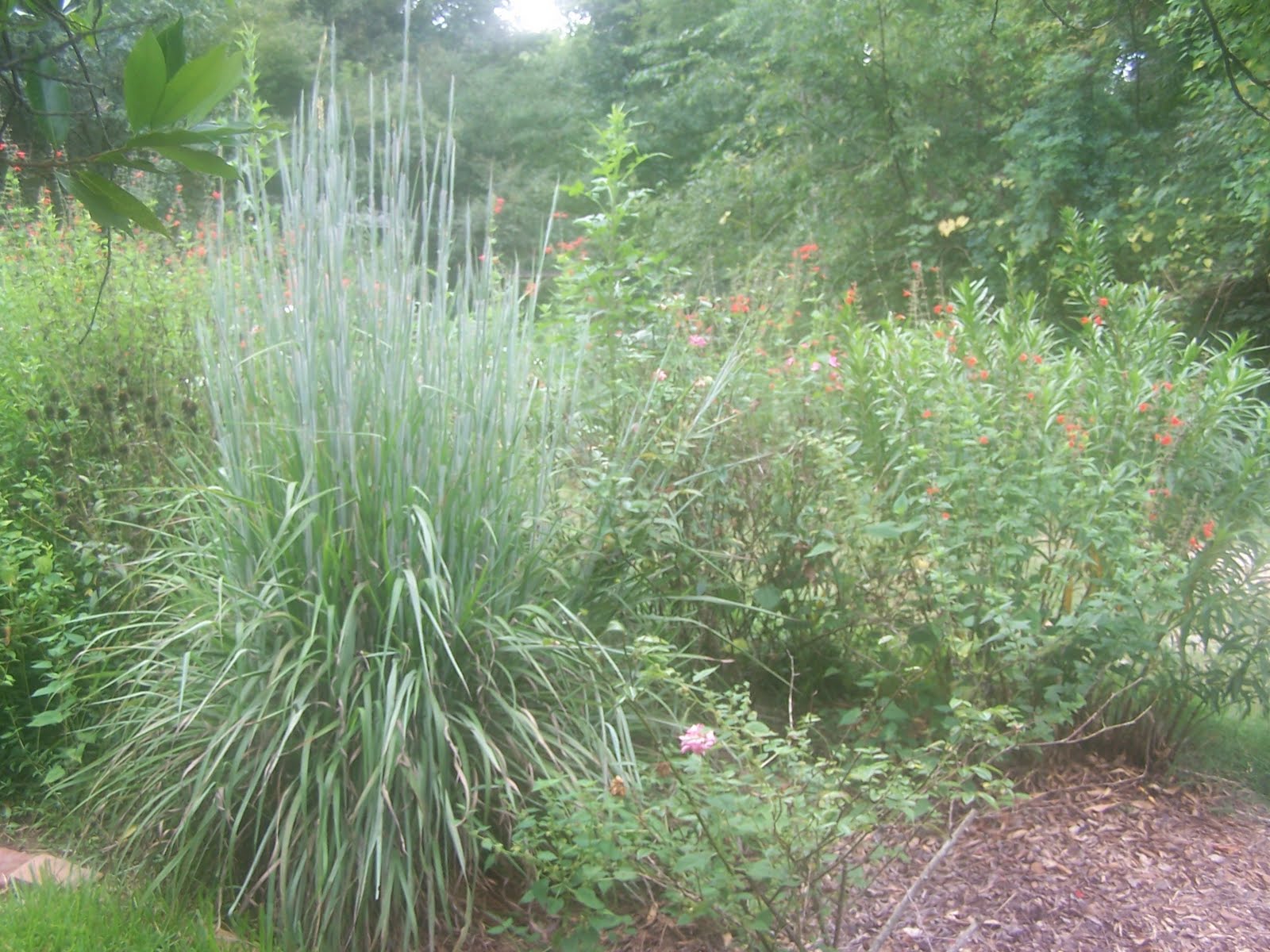
Big Bluestem (Andropogon gerardii) – There are quite a few native grasses that make excellent garden plants, and its so sad that so few are used. Remember: grasses impart a “flowing” texture in the garden that few other plants can match. Grasses “finish” sunny gardens, just as ferns “finish” shady gardens. Incorporating grasses and ferns is the mark of a fine garden(er). Color's cool, but texture's tops! When not in bloom, big bluestem has a fine, fountain-type growth habit. Many genetic strains have very cool gray-green foliage and colorful red-yellow joints on their bloom culms.


Dwarf Maiden Grass 'Adiago'
(admittedly, not photographed at its best...but...trust me...)

Dwarf Maiden Grass (Miscanthus sinensis 'Adagio') – Maiden grass is native to Asia and Africa, and one of the most horticulturally-developed genera in the world. Hundreds of M. sinensis cultivars have been developed over the years. A couple of these cultivars have proven to be invasive within U.S. east coast habitats; but not so in south Louisiana. My favorite maiden grass cultivar is 'Adiago,' a dwarf that grows to no more than 3' X 3'....an excellent “finishing” plant for sunny gardens.

Southern Shield Fern
(the Tropical Sage went ahead & seeded itself in)
Southern Shield Fern (Thelyptris kunthii) – A drought/flood-tolerant fern? Yep! This cosmopolitan species is native not only to Louisiana but also to the entire U.S. Gulf South, West Indies, Mexico, Central America, and down through much of South America! Pale-green – bordering on chartreuse-green – matte-finished fronds contrast beautifully with shinier, darker-green shade-loving companions. Toughest Gulf Rim fern you'll ever meet. Half-sun to full shade.

Friday, September 2, 2011

time of the moth . . .

Five-Spotted Sphinx (photo by Steve Boutte)
Thanx to Monica Boutte for passing along
Steve's fine photos....and for getting me to
thinkin' about moths.


Yeah, I know. You love the butterflies but think moths are sort of creepy. After all, no one has exactly jumped at the chance to create a horror movie about a giant butterfly come to kill us all. Yet enter Mothra(!)....if it wasn't for Godzilla that big crazy nocturnal insect woulda sucked every last one of us up thru its proboscis.


big, powerful fliers; sphinx moths are often mistaken
for some sort of crepuscular hummingbirds
(photo by Steve Boutte)

(Sigh) Anyway, it's moth time down South ya'll. In fact, it's Lepidopteran time, as late-summer/early-fall always hosts the largest and most diverse appearances of both butterflies and moths here along the Gulf Rim.

The first time I visited Charlotte Seidenberg's lovely wildlife garden just a couple of blocks away from the Mississippi River in uptown New Orleans, she couldn't/wouldn't get off the subject of moths. I wanted to talk about birds. She was going on and on about her favorite mothing spots “across the lake” (Ponchartrain) and have I ever seen this moth and that moth. Moth-woman!


diurnal and definitely wasp-like, this Clear-winged Moth
defies moth protocol, but has thus far escaped moth-excommunication
(photo by Bill Fontenot)

By the same token, she immediately gained my respect and admiration for digging such decidedly un-sexy creatures (though Steve Boutte's photos, featured here, surely indicate otherwise). So what I guess I mean is that it's refreshing to hang out with people whose fascination with Nature has taken them farther than the typical “gateway species” such as southern magnolia, flowering dogwood, butterflies, hummers, and songbirds.


back to Steve Boutte's fantasmagoric Five-Spotted Sphinx...
larval form of this species is the much-hated ('cept by thousands of species
of spiders, amphibians, reptiles, and birds) Tomato Hornworm


In her excellent 1995 book, The Wildlife Garden, Charlotte states that “There are 765 species of butterflies in North America, but 10,500 known species of moths!” Huh? So what's the deal, here? That kind of disparity in species diversity indicates that....hmmmm.....moths must be ecologically important. More important than butterflies perhaps. Important as what? Well, as plant pollinators for starters; and as food items for a massive number of creatures from spiders, toads/frogs, small snakes, lizards/skinks to birds, bats and other mammals of all makes and models.


tiny geometrid moths congregate on our bedroom window
(note reflection of some sort of important television
program happening in lower left....)

I love bird ecology – the way that particular bird species situate themselves within particular habitat types; what all they do there, how they do it, and when they do it. My old college buddy Wylie Barrow is a bird ecologist at the National Wetlands Research Center here in Lafayette. We have a mutual fascination regarding which birds eat what foods and when and where they do it. It was after many hours of conversation – and many more hours of Wylie's fieldwork in the cheniere forests along coastal Cameron parish – that we came to a truly cool conclusion regarding migratory songbirds and the food items which are absolutely crucial to their survival as they make their long twice-yearly treks between the temperate and tropical Americas:

Here in coastal Louisiana, roughly the halfway point in the annual migratory route for numerous species of migratory songbirds, the arrival of the bulk of spring-migrating warblers dovetails perfectly with the peak outbreak of geometrid moth larvae (very tiny white/naked caterpillars or “worms”), which the warblers (and other songbirds) attack with gusto. By summer's end, these same geometrids only now adult moths, are out in profusion. In coastal cheneires, these tiny moths roost beneath the leaves of various plants, especially those of giant ragweed, which develops profuse thickets in coastal Louisiana. So guess what? The same warblers and other songbirds, now with offspring in tow and now coursing southward toward the tropics, stop off at the same coastal habitats and now feast on the same moth species – now adults instead of “worms” – utilizing them as a major/crucial food source in the same way that they did with the larvae in the spring.

It's all just so uncannily amazing.

Once you think about it, however, especially from an evolutionary/survival-of-the-fittest perspective, it becomes apparent that those migratory birds which time their stateside arrivals and departures to coincide with geometrid moth outbreaks are the ones that ultimately survive best, passing their now-hardwired sense of migratory timing on to their descendents via DNA. The same scenario holds true for all traveling animals. Ruby-throated Hummingbirds are another example. How is it that they know to hold off on their northbound trans-gulf spring migration route until stateside native nectar sources such as red buckeye, eastern coralbean, and trumpet honeysuckle come into bloom? Are they geniuses or something? Have they engineered such solutions via computers and think-tanks and what-have-you?

Nope. More like idiot-savants: they just do what their Creator tells them to do. Creation has never stopped, ya'll. If it did, animals would no longer know what to eat and when and where to eat it. No, the process continues, with new life forms evolving by the year...by the day...really, moment to moment in time.

Self-conscious ever-analyzing humans find such revealations “amazing,” “incredible,” and “genius.”

“Meanwhile,” as Bob Dylan sang, “life goes on all around us.” It's just another day in paradise...


Vine Sphinx
(photo by Steve Boutte)

I don't want to end this post without bragging a lil' more on Charlotte Seidenberg and her talents not only as a naturalist but as a writer as well. She ain't no spring chicken (I know she's older than me, for example...) but in her love for all living things she's more like a kid than an adult. She even looks more like a kid than an adult. She grew up but she never grew out of that innate fascination with Nature that all of us are born with. In demeanor, she's on the shy side – unless she's talking or writing about Nature. Then she becomes a firey preacher: “...I defy you not to become as intrigued as I with indigenous plants and animals...I defy you not to be as fascinated as I with the complexity and beauty of our native insect life....My garden is becoming a place for learning about the natural world. And the more I know the more I want to know...” she writes in the introduction of The Wildlife Garden.

I know she'd be embarrassed if she read this; but she echos the sentiments of so many of us, particularly in the darkening times in which we live today.

Charlotte writes from a first-person perspective, peppering her books with personal stories. That's what makes them so repeatedly readable. But then she also researches her topics to within inches of their lives. Check out her The New Orleans Garden (1990) for example. I know she had to be cross-eyed for at least a few months after all the microfiche she must have perused in order to determine earliest dates of introduction for three centuries' worth of the hundreds of plants entering the garden scene in New Orleans. Ditto for The Wildlife Garden. Read 'em; and I defy you to believe otherwise.

Oh, and . . . Long Live the Moth!

Wednesday, August 17, 2011

summer's end...


“...porch-ful of squash & pumkins
summer's always really somethin'
then fall arrives with a chilly dawn.....”

-- Greg Brown


It always happens so suddenly that it tends to startle us, even after 34 years of living in the woods:  you slog thru another steamy searingly hot summer and suddenly one fine morning comes a change. A very subtle change in weather, accompanied by a more unmistakable a change in sounds.

This year The Change occurred the morning of August 15. We shuffle onto the back porch, coffees in hand, ease down into our wal-mart chairs, and bam! Where's the noise??

We're cozied up to a large tract of bottomland hardwood forest within the Bayou Vermilion floodplain – actually/geologically, the combined floodplains of Bayous Vermilion, St. Clair, & Teche (God! What're we doing here??) – so things are still pretty wild here...tons of birds, lizards, snakes, coyote, etc. On normal summer mornings our backyard is a veritable avian Times Square, with hummingbirds, woodpeckers, cardinals, chickadees, titmice, wrens, buntings, finches, rushing about, having breakfast, and hollering like it's the last or first day of their lives. The cardinals and wrens are always the loudest – often obscenely-loud, waking us with their songs thru shut windows and droning air-conditioner – and joined with the tinier songs of the others, the combined noise forces us to speak to one another louder than we'd like at that time of day.

    "So didja sleep ok last nite? (pause; no reply) So DIDJA?"
    "Huh? What's that y'said?"

Carolina Wren -- Gram for gram, the loudest mouth of the bunch
(photo by Dave Patton, or Beth Erwin or maybe somebody else)


On normal summer mornings added as a symphonic backdrop to the bird cacaphony are the many-layered choruses of cicadas, usually working at decibel levels akin to those of the cardinals and wrens. And their verses are staggered, similar to our 'Row Row Row Yer Boat' song, so that they drone on and on without a break, first climbing higher and then back down the ladder. This cicada symphony itself is backed by a mysterious low-frequency, whirring chorus of some other kind of insect. I've always assumed its origin is some sort of cricket species, but I really don't know. Because it is so absolutely and perfectly continious....whirring on, nonstop, at a single pitch, hour after hour....i sometimes fantasize that it is the actual song-voice of the Universe.

Come late July and August things just keep getting more hectic. By then, young birds of all makes and models join their parents in song, effectively bolstering the noise factor by half or more. Early fall migrants such as flycatchers, gnatcatchers, and vireos turn up looking for food, water, and short rests – and all hollering as well. Migrating hummingbirds horn in on the local hummer scene, cause much consternation and pandemonium, with screaming and chasing ensuing throughout the daylight hours.

Blue-gray Gnatcatcher
(photo by Dave Patton)

 
As the heat of each day sets in, vireos become more and more consistent with their vocalizations: repetitious hum-drum sing-songs monotonously cycling until peak heat arrives (ca. 3-4pm) when they finally shut it down for a couple of hours. Even more than cicada songs, vireo songs will mesmerize any listener, human and critter alike, to the point of hypnosis and then slumber. Which is all good, since that's precisely what everyone should be doing during that particular intensity of heat.


Red-eyed Vireo
(photo by Matt Conn)


Anyway, imagine then a morning when you wake up and suddenly all of the noise (save for the mysterious whirring one) is gone; or at least drastically modified to the point where you have to focus in order to hear anything at all (besides the mysterious whirring one, that is).

On the morning of August 15, the best that the backyard could muster (besides the mysterious whirring noise) was a few muted cardinal “chits” and maybe a few “cheets” from the finches, chickadees, and titmice – all coming not from the backyard, but now from deeper in the surrounding woods; as if they're all now suddenly become shy and reserved. And no one was in the breakfast line over at the seed feeders. The cicada chorus gets to a very late start, now droning quite a bit lower and slower and unenthusiastically tailing off almost as soon as it begins.

Suddenly then, there is more silence than noise. The effect, as previously mentioned, is physically and emotionally startling. Aha! Where are you, autumn? We feel you out there somewhere!

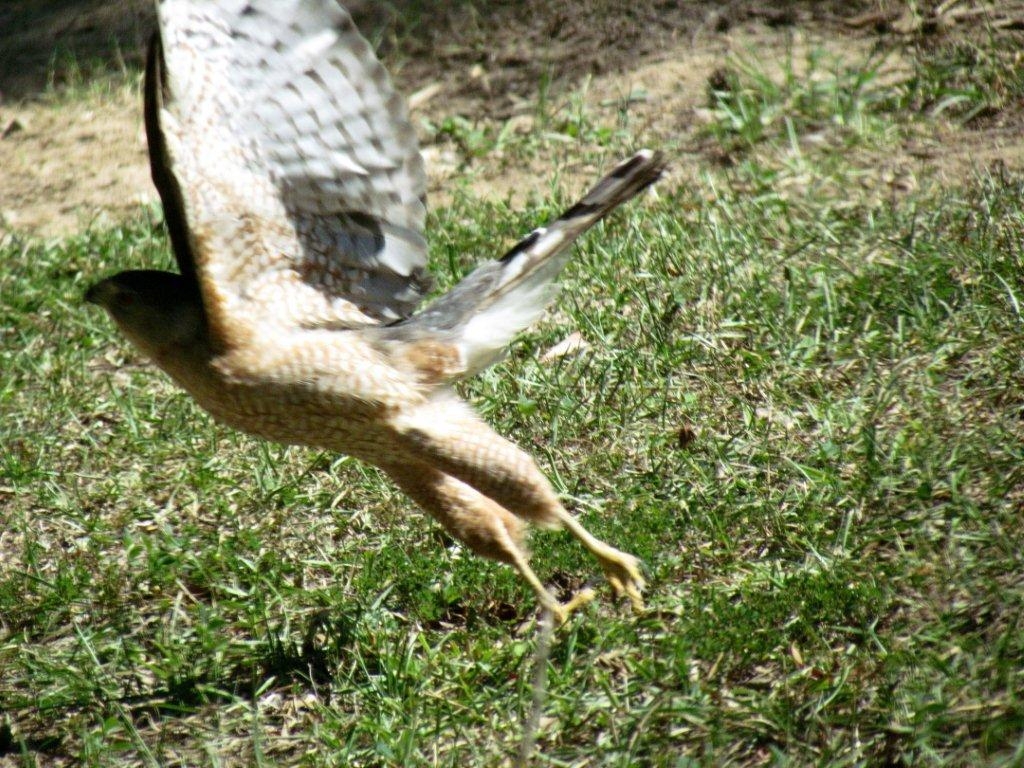
Dawn on August 15 also began with a noticeable drop in temperature and humidity; and you swear you can feel a hint of a breeze. Yes! And from the north! Well....from the west-northwest....but we'll take it! As the day progresses the breeze, faint as it is, stirs a few migratory hawks over the place. We hear the piercing whistles of Broad-winged Hawks to our north, between the forest canopy and the crawfish ponds; and the songbirds scatter as a Cooper's Hawk crashes through the woods.


young Broad-winged Hawk
(photo by James Beck [i think])


adult Cooper's Hawk pounces
they strike like lightning
(photo by Larry Amy)

Come midday butterflies appear in numbers we haven't seen in a good while – mainly giant swallowtails, checkerspots, and the first of what will become a massive wave of gulf fritillaries by the end of the month – all competing with the transient hummingbirds for nectar from the salvias, turk's caps, obedient plants, and buttonbushes in the beds surrounding the house.


Checkerspot


Fritillary

Yep, summer's on its way out, ya'll. Long live the fall! We know it's out there somewhere...........

Monday, July 25, 2011

back to the island...


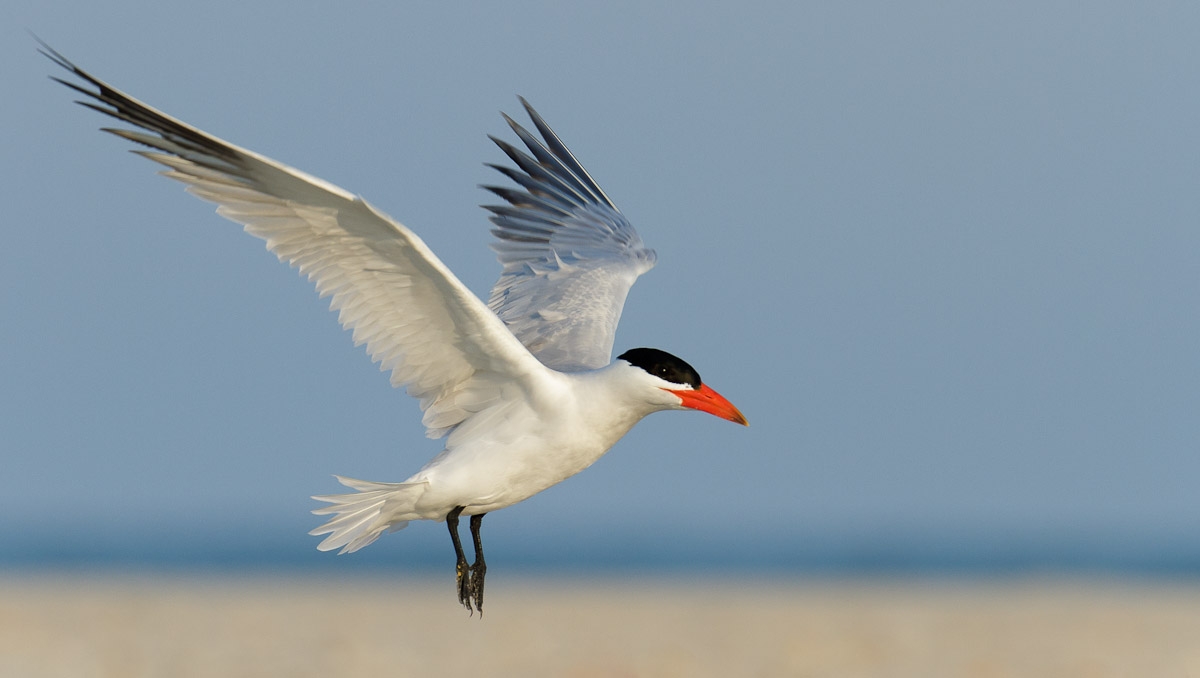
Caspian Tern
(photo by Russ Norwood http://www.theperceptivist.com/)


Listen, I promise that I'll get to that “tough plants for tough times” post......it's just that, well, Molly “Eagle Eye” Richard and I did a fun/interesting bird trip to Grand Isle last week, and I got some decent photos of it and so just had to write it up.


Molly "Eagle Eye" Richard Scanning the Gulf of Mexico
Really, she barely needs binoculars...

I'd been needing to go to Grand Isle all summer in order to procure habitat/bird photos for a writing project that I'm in the middle of. I happened to run into Molly (Lafayette birder who owns a camp in GI), told her of my dilemna, and didn't need to twist her arm.

We drove down on July 21, having the usual fine time laughing and singing along to the hits of yesteryear on Molly's favorite oldies station. By the time we hit Port Fourchon, where the birding/photographing would begin, the weather had turned to awesome: 88F with a mild southwesterly breeze thrown in for good measure; mostly cloudy skies nicely blocking that mean old sun, and featuring very cool, darker blue-gray columns of rain showers miles away in almost every direction. Let the birding/photographing begin!


Port Fourchon; mowed marsh (foreground), industry on parade (background)
Sometimes Birding Can Become Quite Surreal, Y'Know?

 
Port Fourchon is a heavily industrialized oilfield warehousing and transportation terminal plopped right over the marsh, leaving pockets of natural habitat interspersed throughout. Birding there is weird-but-usually-good. The big deal at Port Fourchon on July 21 was Common Nighthawks. They were everywhere: on wires, fences, and directly on the ground – mostly around large limestoned parking and storage areas. Eventually we tallied 50 of them there; more than either of us had seen before in one locale.


Common Nighthawk, Resting on Mudflat


Next we hit Elmer's Island, actually a sandy peninsula featuring hunks of marsh and marsh pools, a nice beach, and a large lagoon. It was noontime, and large aggregations of seabirds were crowded together loafing in the lagoon.


Gang of Brown Pelicans
Loafing in the Lagoon


Overhead, Magnificent Frigatebirds were soaring way up in the sky, working the breeze like it was their personal plaything.


Magnificent Frigatebird Toying with the Breeze
(too bad the image is small; google for better picture...)


By the time we hit Grand Isle State Park on the eastern edge of the island, bird activity had lulled to near-nonexistent, with only mockingbirds and Eastern Kingbirds flitting around the dune brush. We didn't observe a single seabird on the beach. But the skies were still spectacular and the seas were nearly glass-calm.


Adult Clapper Rail Feeding Young


Departing the park, we spied an adult Clapper Rail, a salt-marsh specialist, rounding up tiny land crabs and feeding them to its young. Taking photos for 15-20 minutes, we eventually saw two adults and 4-5 fuzzy, black-plumaged young.


Young Clapper Rail
On cue, the Stones' "Paint it Black" was pouring from
Molly's oldies station at the time...

Even for biophiles who look hard to see the beauty in all living things, it's hard to find anything but goofiness about a young rail. At best, they resemble the illegitimate children of Big Bird. I reckon you'd have to look directly into the eye of a young rail to find the real Truth/Beauty that resides there.

Almost as an afterthought, we decided to check the “Exxon Fields” for shorebirds on the way back to Molly's camp. Now owned by a smaller petroleum processor, this large complex of marsh chunks dotting short-grass fields has traditionally yeilded fine shorebirding. Several weeks earlier, during the peak of the drought, Molly had checked this area out and found it totally dry, with hardly even any living vegetation in the short-grass fields. Since then, however, the rains began, and today featured expansive pools of shallow water and lushly-recovering grasses and forbs, and filled with laughing gulls, willets, black-necked stilts, and numerous sandpipers including the uncommon Short-billed Dowitcher.


Black-necked Stilts Feeding at "Exxon Fields"

Like Clapper Rails, Short-billed Dowitchers are salt-marsh lovers. And because salt-marsh habitats are relatively difficult to access, these two species (as well as Seaside Sparrow) are less observed by the regular birding public.


Bathing Laughing Gulls (foreground) and loafing Short-billed Dowitchers (far background)

Non-breeders in Louisiana, Short-billed Dowitchers occur here mainly in winter, foraging in very small groups in salt-marshes and mangrove swamps. Only rarely are they found in larger groups during spring and fall migration periods, when lucky birders can even find them inland, especially in the ricefield country of southwestern Louisiana. Eventually, Molly and I counted over 160 fall-migrating Short-billed Dowitchers at the Exxon Fields that afternoon – again, more than either of us had ever counted in a single locale in Louisiana.

So now we had accumulated impressive personal high-counts on Common Nighthawk and Short-billed Dowitcher, and probably Clapper Rail (13) as well, all – as the Kinks would sing – on “a lazy summer day.”
 
 
Black Skimmer or "Bec a' Ciseaux" en Francais
(photo by Russ Norwood http://www.theperceptivist.com/


The last bird of the day -- one of Molly's all-time favorite species -- was a Black Skimmer, foraging in a tiny salt-marsh pool just off the back deck of her camp.

Tuesday, July 19, 2011

wests on da' nest...

Western Kingbird, 2.5mi NW of Breaux Bridge
06 July 2011; note dangling nest pieces, lower left
(photo by Bill Fontenot)


Even though it's always “now,” time sure does fly, y'know?


I've been wanting to post a 'tough plants for tough times' gardening piece; and even though recent rains have temporarily quashed The Big Dry that we've been experiencing here over the past several years, I promise to get around to that one. For now, though, the big nature news down here around Lafayette is Gary Broussard's recent discovery of nesting Western Kingbirds just northwest of Breaux Bridge.

He first observed an adult bird on May 22 at a big pasture/powerline complex at the corner of d'Augereaux Rd. X Saw Mill Hwy (LA 354), and emailed me about it, as we both live in the vicinity. Though interesting, this was no big deal, since Western Kingbirds are pretty much “expected” throughout much of Louisiana, especially during migration periods.

But when he saw it again at the same place around noon on June 05, things began to get interesting. Rare nesters in Louisiana, mostly confined to several pairs annually up in the Shreveport area, where landscape values more closely match those of its more usual Great Plains/western U.S. breeding range, any Western Kingbird seen in our state in the month of June is a potential candidate for breeding/nesting. Any nesting noted anywhere outside of northwestern Louisiana would be big news indeed.

When he saw it again at the same place on July 04, that was enough for me. On the following evening (July 05), I went out there, camera-equipped, with grandson Bernie Robichaux tagging along. A thunderstorm had just passed, and thanx to Bernie's sharp eyes we saw two birds further east on d'Augereaux Road, both perched high on nearby mega-powerlines, yet widely separated. So I didn't get a chance to do any photographing. Thankfully, Gary had succeeded in photographing one bird earlier that day, watching it feed at least one nestling at a nest lodged on a crossbar of a wooden power pole on the road side. He also saw the second bird at that time. Returning at noon that same day, he was able to get a photo that showed one adult and the rubbery yellow/red bill of one nestling poking out of the nest. Now that's an outstanding job of documentation. Good on ya' mate.


05 July 2011; note one nestling's mouth just above the crossbar (lower right)
photo by Gary Broussard


Due to his cavalieresque propensity for finding interesting birds, I used to call Gary a Bird Dog; but over the years I've come to realize that he's much more of a Bird Whisperer. Rare birds simply want to show themselves to him. They throw themselves at his feet, praying that he'll at least glance at them.

Anyway, I finally got decent photos of one adult and the nest at 7:30pm (July 06) as I was heading out to see/hear the fabulous Cathead Biscuit Boys at Cafe' des Amis in Breaux Bridge. Traffic was light at that time, and I could park near the nest, and the sun/light was in my favor.  On the evening of July 09, Bernie, his sister Lauren and I, returned to check on the birds, seeing one adult on the crossbar, the other on the nest.


06 July 2011; one adult at (relative) ease, the other (hidden) on the nest
(photo by Fontenot)

Time ticked and Gary stuck with it, observing a second nestling in the early morning hours of July 12. Finally, around noon on July 14, he snapped this awesome photo of the two nestlings – now fledglings – perched vulnerably-low ([sigh]; as fledglings often do...) on the fence below the nest “with parents looking on nervously.”


Western Kingbird fledglings, 14 July 2011
Free at Last, Free at Last...
(photo by Gary Broussard)


Away from the Shreveport area, there are precious few June records of Western Kingbird – the month in which nesting should be strongly suggested, if not confirmed. On June 20, 1970, New Orleans birder Dan Purrington saw an individual in St. Landry parish, three miles north of Lebeau; and most recently (June 06, 2008) a bird was observed by Lafayette bird biologist Bill Vermillion on West Etienne Road in Vermilion parish, about seven miles north of LA 14 between Abbeville and Kaplan.

As far as we know, though, the only other recorded/confirmed instance of Western Kingbird nesting in south Louisiana came on June 11, 1966, when A. W. Palmisano spied a nest attended by two adults at Rockefeller Wildlife Refuge (coastal Cameron parish). By June 23 he noted one adult still incubating on the nest, but the ultimate fate of this attempt was not resolved.

In Louisiana, the Western Kingbird is classed as a “rare to casual (= “occasional” = not observed/recorded every year)” spring and fall migrant; casual in winter; and an uncommon breeder in the Red River ag lands around Shreveport. Louisiana's first-ever record of Western Kingbird dates back just about as far as our records go: an early-April sighting at Barataria Bay in 1837 by none other than John James Audubon.