Monday, July 25, 2011

back to the island...


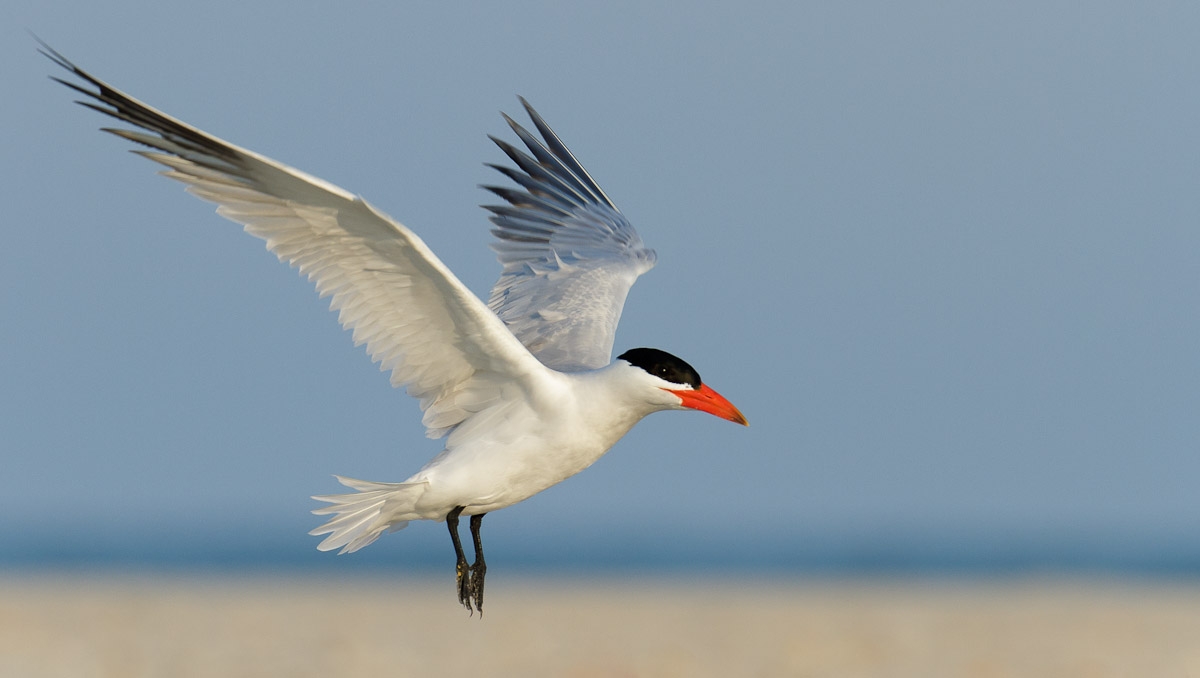
Caspian Tern
(photo by Russ Norwood http://www.theperceptivist.com/)


Listen, I promise that I'll get to that “tough plants for tough times” post......it's just that, well, Molly “Eagle Eye” Richard and I did a fun/interesting bird trip to Grand Isle last week, and I got some decent photos of it and so just had to write it up.


Molly "Eagle Eye" Richard Scanning the Gulf of Mexico
Really, she barely needs binoculars...

I'd been needing to go to Grand Isle all summer in order to procure habitat/bird photos for a writing project that I'm in the middle of. I happened to run into Molly (Lafayette birder who owns a camp in GI), told her of my dilemna, and didn't need to twist her arm.

We drove down on July 21, having the usual fine time laughing and singing along to the hits of yesteryear on Molly's favorite oldies station. By the time we hit Port Fourchon, where the birding/photographing would begin, the weather had turned to awesome: 88F with a mild southwesterly breeze thrown in for good measure; mostly cloudy skies nicely blocking that mean old sun, and featuring very cool, darker blue-gray columns of rain showers miles away in almost every direction. Let the birding/photographing begin!


Port Fourchon; mowed marsh (foreground), industry on parade (background)
Sometimes Birding Can Become Quite Surreal, Y'Know?

 
Port Fourchon is a heavily industrialized oilfield warehousing and transportation terminal plopped right over the marsh, leaving pockets of natural habitat interspersed throughout. Birding there is weird-but-usually-good. The big deal at Port Fourchon on July 21 was Common Nighthawks. They were everywhere: on wires, fences, and directly on the ground – mostly around large limestoned parking and storage areas. Eventually we tallied 50 of them there; more than either of us had seen before in one locale.


Common Nighthawk, Resting on Mudflat


Next we hit Elmer's Island, actually a sandy peninsula featuring hunks of marsh and marsh pools, a nice beach, and a large lagoon. It was noontime, and large aggregations of seabirds were crowded together loafing in the lagoon.


Gang of Brown Pelicans
Loafing in the Lagoon


Overhead, Magnificent Frigatebirds were soaring way up in the sky, working the breeze like it was their personal plaything.


Magnificent Frigatebird Toying with the Breeze
(too bad the image is small; google for better picture...)


By the time we hit Grand Isle State Park on the eastern edge of the island, bird activity had lulled to near-nonexistent, with only mockingbirds and Eastern Kingbirds flitting around the dune brush. We didn't observe a single seabird on the beach. But the skies were still spectacular and the seas were nearly glass-calm.


Adult Clapper Rail Feeding Young


Departing the park, we spied an adult Clapper Rail, a salt-marsh specialist, rounding up tiny land crabs and feeding them to its young. Taking photos for 15-20 minutes, we eventually saw two adults and 4-5 fuzzy, black-plumaged young.


Young Clapper Rail
On cue, the Stones' "Paint it Black" was pouring from
Molly's oldies station at the time...

Even for biophiles who look hard to see the beauty in all living things, it's hard to find anything but goofiness about a young rail. At best, they resemble the illegitimate children of Big Bird. I reckon you'd have to look directly into the eye of a young rail to find the real Truth/Beauty that resides there.

Almost as an afterthought, we decided to check the “Exxon Fields” for shorebirds on the way back to Molly's camp. Now owned by a smaller petroleum processor, this large complex of marsh chunks dotting short-grass fields has traditionally yeilded fine shorebirding. Several weeks earlier, during the peak of the drought, Molly had checked this area out and found it totally dry, with hardly even any living vegetation in the short-grass fields. Since then, however, the rains began, and today featured expansive pools of shallow water and lushly-recovering grasses and forbs, and filled with laughing gulls, willets, black-necked stilts, and numerous sandpipers including the uncommon Short-billed Dowitcher.


Black-necked Stilts Feeding at "Exxon Fields"

Like Clapper Rails, Short-billed Dowitchers are salt-marsh lovers. And because salt-marsh habitats are relatively difficult to access, these two species (as well as Seaside Sparrow) are less observed by the regular birding public.


Bathing Laughing Gulls (foreground) and loafing Short-billed Dowitchers (far background)

Non-breeders in Louisiana, Short-billed Dowitchers occur here mainly in winter, foraging in very small groups in salt-marshes and mangrove swamps. Only rarely are they found in larger groups during spring and fall migration periods, when lucky birders can even find them inland, especially in the ricefield country of southwestern Louisiana. Eventually, Molly and I counted over 160 fall-migrating Short-billed Dowitchers at the Exxon Fields that afternoon – again, more than either of us had ever counted in a single locale in Louisiana.

So now we had accumulated impressive personal high-counts on Common Nighthawk and Short-billed Dowitcher, and probably Clapper Rail (13) as well, all – as the Kinks would sing – on “a lazy summer day.”
 
 
Black Skimmer or "Bec a' Ciseaux" en Francais
(photo by Russ Norwood http://www.theperceptivist.com/


The last bird of the day -- one of Molly's all-time favorite species -- was a Black Skimmer, foraging in a tiny salt-marsh pool just off the back deck of her camp.

Tuesday, July 19, 2011

wests on da' nest...

Western Kingbird, 2.5mi NW of Breaux Bridge
06 July 2011; note dangling nest pieces, lower left
(photo by Bill Fontenot)


Even though it's always “now,” time sure does fly, y'know?


I've been wanting to post a 'tough plants for tough times' gardening piece; and even though recent rains have temporarily quashed The Big Dry that we've been experiencing here over the past several years, I promise to get around to that one. For now, though, the big nature news down here around Lafayette is Gary Broussard's recent discovery of nesting Western Kingbirds just northwest of Breaux Bridge.

He first observed an adult bird on May 22 at a big pasture/powerline complex at the corner of d'Augereaux Rd. X Saw Mill Hwy (LA 354), and emailed me about it, as we both live in the vicinity. Though interesting, this was no big deal, since Western Kingbirds are pretty much “expected” throughout much of Louisiana, especially during migration periods.

But when he saw it again at the same place around noon on June 05, things began to get interesting. Rare nesters in Louisiana, mostly confined to several pairs annually up in the Shreveport area, where landscape values more closely match those of its more usual Great Plains/western U.S. breeding range, any Western Kingbird seen in our state in the month of June is a potential candidate for breeding/nesting. Any nesting noted anywhere outside of northwestern Louisiana would be big news indeed.

When he saw it again at the same place on July 04, that was enough for me. On the following evening (July 05), I went out there, camera-equipped, with grandson Bernie Robichaux tagging along. A thunderstorm had just passed, and thanx to Bernie's sharp eyes we saw two birds further east on d'Augereaux Road, both perched high on nearby mega-powerlines, yet widely separated. So I didn't get a chance to do any photographing. Thankfully, Gary had succeeded in photographing one bird earlier that day, watching it feed at least one nestling at a nest lodged on a crossbar of a wooden power pole on the road side. He also saw the second bird at that time. Returning at noon that same day, he was able to get a photo that showed one adult and the rubbery yellow/red bill of one nestling poking out of the nest. Now that's an outstanding job of documentation. Good on ya' mate.


05 July 2011; note one nestling's mouth just above the crossbar (lower right)
photo by Gary Broussard


Due to his cavalieresque propensity for finding interesting birds, I used to call Gary a Bird Dog; but over the years I've come to realize that he's much more of a Bird Whisperer. Rare birds simply want to show themselves to him. They throw themselves at his feet, praying that he'll at least glance at them.

Anyway, I finally got decent photos of one adult and the nest at 7:30pm (July 06) as I was heading out to see/hear the fabulous Cathead Biscuit Boys at Cafe' des Amis in Breaux Bridge. Traffic was light at that time, and I could park near the nest, and the sun/light was in my favor.  On the evening of July 09, Bernie, his sister Lauren and I, returned to check on the birds, seeing one adult on the crossbar, the other on the nest.


06 July 2011; one adult at (relative) ease, the other (hidden) on the nest
(photo by Fontenot)

Time ticked and Gary stuck with it, observing a second nestling in the early morning hours of July 12. Finally, around noon on July 14, he snapped this awesome photo of the two nestlings – now fledglings – perched vulnerably-low ([sigh]; as fledglings often do...) on the fence below the nest “with parents looking on nervously.”


Western Kingbird fledglings, 14 July 2011
Free at Last, Free at Last...
(photo by Gary Broussard)


Away from the Shreveport area, there are precious few June records of Western Kingbird – the month in which nesting should be strongly suggested, if not confirmed. On June 20, 1970, New Orleans birder Dan Purrington saw an individual in St. Landry parish, three miles north of Lebeau; and most recently (June 06, 2008) a bird was observed by Lafayette bird biologist Bill Vermillion on West Etienne Road in Vermilion parish, about seven miles north of LA 14 between Abbeville and Kaplan.

As far as we know, though, the only other recorded/confirmed instance of Western Kingbird nesting in south Louisiana came on June 11, 1966, when A. W. Palmisano spied a nest attended by two adults at Rockefeller Wildlife Refuge (coastal Cameron parish). By June 23 he noted one adult still incubating on the nest, but the ultimate fate of this attempt was not resolved.

In Louisiana, the Western Kingbird is classed as a “rare to casual (= “occasional” = not observed/recorded every year)” spring and fall migrant; casual in winter; and an uncommon breeder in the Red River ag lands around Shreveport. Louisiana's first-ever record of Western Kingbird dates back just about as far as our records go: an early-April sighting at Barataria Bay in 1837 by none other than John James Audubon.

Tuesday, June 7, 2011

whoops!


Whooper Watchers: (L) Ezra Pound, (R) T.S. Eliot
(photo by Mark Manuel)


Much like the American buffalo/bison, the Whooping Crane was once a substantial component of North America's post-Pleistocene fauna. Turns out that both species have pitifully failed to adapt to “civilized” humanity and the indelible marks that it has subsequently made on the North American landscape.


Not so very long ago, Whooping Cranes were common on our continent, ranging from New Jersey west to Utah, and from the Arctic coast southward to the central Mexican coast – Louisiana included. As late as 1899, famed Texas biologist Vernon Bailey characterized them as “common” in the prairies of Jeff Davis parish near Iowa, LA.

It is said that the advent of mechanized agriculture – and particularly the draining of the marshes and wet prairies – is what did the whoopers in. By 1941 only 15-20 birds remained continent-wide, including six birds in an isolated non-migratory colony just north of White Lake in southwestern Louisiana. By 1950, the last surviving member of the Louisiana colony was trapped and transported to the migratory colony that winters each year on the central Texas coast. Alas, shortly after its arrival it was killed by a coyote . . .


Whooping Cranes are about 5' tall, with 7.5' wingspans & weigh about 15lbs
(photo by Mark Manuel)


A Whooping Crane restoration program was initiated shortly thereafter. Today, after 60 years of work, around 400 whoopers exist in the wild, limited to one larger migratory colony that annually commutes between its Saskatchewan breeding grounds and wintering grounds in coastal Texas, as well as a small, introduced colony located in central Florida. An additional 150 individuals are kept in captive breeding programs in several locations in the U.S. and Canada.


Four Runaway Whoopers at the Cazan's Lake complex
Northeastern Evangeline parish; 28 May 2011

In mid-February of this year (2011) ten young Whooping Cranes were transported to White Lake (western Vermilion parish), the last known Louisiana location of the historical flock, in an effort to re-establish a non-migratory colony in Louisiana. Three months later, four of the ten whoopers had elected to relocate themselves about 65 miles northeast of the original reintroduction site at White Lake, to David Fontenot's rice farm in northeastern Evangeline parish.


David Fontenot, Mac Myers, Mark Manuel
Talkin' Whoopers

On May 26, a week after David had discovered the whoopers at his place, I received a call from old childhood buddy Mark Manuel. He had run into David somewhere, and David had told him the story. Knowing that I'd be interested. Mark called with an invitation to check out the birds at David's farm.

David farms the old “Cazan's Lake” complex, due east of and contiguous with Chicot State Park. Together, these two natural areas hold about 10,000 acres of wetlands and woodlands, much of it inaccessible to all but a few people. This area was a big part of my own stomping grounds back in the day. In fact, Cazan's Lake (actually an amalgamation of several different lakes and swamps surrounded by rice fields and bordered by Bayous Chicot and Cocodrie) once hosted a hunting/fishing club, of which I was a member in the 1960s.

Concerned that my camera might not be quite up to snuff, I invited long-time Louisiana birder Mac Myers along, as I knew his camera was better than mine. Fortunately, Mark brought his camera along as well, and between the three of us we came up with an acceptable – if not artistic – batch of pictures.

The weather was fine, the landscape gorgeous; and it was a real treat to not only see Whooping Cranes (for the first time in my life) but also to reconnect with David and Mark.

Fortunately for us, but unfortunately for them, the birds are not very wary, at times allowing us to get within 50 yards of them. We all wondered aloud what would become of these beautiful creatures once hunting season begins.

David did the right thing, immediately contacting Louisiana Department of Wildlife & Fisheries to tell them what he had found. Days later, two Whooping Crane Reintroduction Program specialists arrived to document the birds, assuring David that they would be back on a weekly basis to check on them.

What are you gonna do, you know? Birds have wings. And minds of their own. And whoopers have relatively ancient genetics – hardwired for who-knows-what? Continental drifting, would be one guess.
For now, these birds looked to be steadily foraging (we could not determine exactly what they were eating) and looked to be quite content.

So it's like my dad -- and favorite hunting/fishing partner -- used to say: “We shall see what we shall see . . .”

Wednesday, May 25, 2011

the gift that keeps on giving...


Four or five years ago, when Lydia and I still had the native plant nursery, we had a dozen or so bare-root live oak seedlings left over from a job. At that time I knew that Louis and Ashlee Michot were planting trees around their new place between Grand Coteau and Arnaudville, so I called them up to come and get the oak seedlings. We couldn't synchronize our schedules so I told them that I'd leave the seedlings in our potting area and they could just come and pick them up at their convenience.


Eventually they did come to get the oaks; and as an afterthought I guess, Louis heeled in (half-buried) a handful of wildflower seedlings in a pot of bark mulch lying around the potting area. We were really busy with stuff back then, so those seedlings had to fend for themselves, surviving in that pot of bark mulch without any supplemental fertilizer or water. In fact, they had to survive there for over a year before Lydia finally rescued them and planted them in her “herb wheel” on the west side of the yard.

Over the years, I didn't take much note of them. Then, this past spring they forced me to notice them via the sheer beauty of their blooms – and their numbers. Turned out to be prairie larkspurs (Delphinium carolinianum; aka “Carolina Larkspur”). In the intervening three years they had spread nicely, seeding themselves throughout the whole herb wheel.

little miracles

So I recently called Louis to get the story on the larkspurs. He barely remembered the details, but apparently, he had snatched up a handful of them as his band (the fabulous Lost Bayou Ramblers) was journeying home from a gig in Texas. They must have still been in his vehicle when he stopped to pick up the oak seedlings.

Larkspurs belong to the Ranunculus or Crowfoot plant family, a large group comprised of over 1,000 species – most of them very showy bloomers. Other Crowfoot family members include buttercups, Clematis, columbines, meadow-rues, and Anemones. There are over 150 species of larkspurs alone. Here in North America, we probably have 50-75 species and subspecies. 

Wednesday, May 11, 2011

call for auditions!

"ALRITE!" A Two-Act Quasi-Musical

PLEASE SPREAD THE WORD TO YOUR MUSICAN/ACTING FRIENDS!!!!

Auditions will be held on Sunday, May 15 (3pm) and Wednesday, May 18 (6pm) at Cite' des Arts in Lafayette for the play, “Alrite!” scheduled to run at Cite' on August 25-28 and September 1-4, 2011.


(Dear regular readers, please forgive/indulge me this off-topic post. This site/blog is the best that I can do to detail this important announcement.....)

The Play

Not exactly a musical, “Alrite!” is a Two-Act play about a group of former professional musicians who've lost their “day jobs” and have ended up back in their hometown, to find that their old band leader is still performing around town. “Alrite!” will feature nine original songs, instrumentally/vocally performed by the actors themselves. There are also a few non-musician roles involved.

Writer: Bill Fontenot Director: Christy Leichty Musical Director: Bruce MacDonald

Stage Manager: Jim Phillips


The Cast


JEANNIE: woman 45-55 yrs old; Rock Singer

UNCLE RICK: man 55-60 yrs old; Rock Guitarist

DON: man 45-55 yrs old; Singer/Acoustic Guitarist

TOM: man 45-55 yrs old; Singer/Rock Bassist

MIKE: man 45-55 yrs old; Rock Bassist

DANNY: man 25-35 yrs old; Rock Drummer

CHERRIE: woman 45-55 yrs old; Bartender

CECIL: man 20-60 yrs old; Radio Station Tech

GAIL: woman 40-60 yrs old; Radio Station Manager

UN-NAMED AIRLINE EMPLOYEE: man or woman any age

UN-NAMED OLD CAJUN COUPLE: man and woman 60-80 yrs old


The Commitment


Rehearsals begin in June and will continue through July and August, through show time.


For More Information


Contact Bill Fontenot, natrldlite@cox.net 337.896.9187(h) 337.852.5576(c)

Christy Leichty, christyleichty@gmail.com 337.290.1549


PLEASE SPREAD THE WORD TO YOUR MUSICIAN FRIENDS!!!!!!

Friday, April 29, 2011

by any other name.......

Rosa mysterioso

     My Mom's name is Rose. Between 1965-1995 she maintained a really nice hybrid-tea rose garden. So I grew up around roses, literally and figuratively.

     And then there's that mysterious rose tattoo that appeared on my right arm on July 04, 1976 – the day after our great nation's bicentennial – after a Hunter Thompson-esque trip to Leesville/Fort Polk, LA. I first noticed the tatto on July 05, upon waking up in my underwear on the parlor floor of my buddy Mark's grandma's house in the notorious little farming community of Point Blue, Louisiana. Wandering into his grandma's kitchen (headed for the bathroom) I quickly realized that it was not early in the morning, as I had thought. It was in fact after lunch; and I was greeted by not only Mark's grandma, but also a number of her friends – all gathered around the kitchen table, and busy playing cards, drinking whiskey-laced black coffee and smoking cigarettes rolled out of paper bags. "What's wrong, cher? You don't know where you are? What's dat on your arm?" We all had a good laugh. O but I digress. . .

     What I mean to say is that I guess I was destined to become a rose affectionado. And that really came to pass in 1990, when wife Lydia brought home our first antique rose. Now roses, modern roses included, are known for their fragrance; but for the most part, modern roses all possess a very similar fragrance. Very nice, but homogeneous. Each antique rose, on the other hand, possesses its very own unique fragrance, as well as its very own unique flower structure. The first time I sniffed an antique, I was instantly hooked. Aromatherapy is real, ya'll.

     Antique roses are divided into a number of classes, including Hybrid Musk, Multiflora, Bourbon, China, Noisette, Gallica, Moss, Tea, Hybrid Perpetual, Polyantha, and more. Think of them as fine wines, each variety and blend with its own distinctive characteristics.

     When planning for rose-gardening, almost as important as knowing individual cultivar name and classification is knowing individual cultivar bloom season. Bloom season categories include “ever-blooming” (blooms nearly year round, taking the occasional “rest” during periods of unfavorable weather), “twice-blooming” (usually during spring and fall), and “once-blooming” (usually in spring). And of course it pays to study up on old rose varieties/cultivars that do best in your particular region. One of the better resources for the lower South is Dr. William Welch's Antique Roses for the South (Taylor Publishing 1990).

     Presently, Lydia and I have about 22 “old rose” cultivars growing around our place. Here are some of our favorites:


the humble 'Old Blush'


     By 1000 B.C., the Chinese were already breeding fancy, double-flowered garden roses. The first of these everblooming China roses to reach the U.S. was 'Old Blush' in 1752. Because of its everblooming habit, because it is so sturdy, and because of its ancient lineage, I suggest that every Deep South antique rose collection should begin with this one.

uber-fragrant 'Champneys' Pink Cluster'

     'Champneys' Pink Cluster' is a noisette, introduced in the early 19th century. The noisettes were the first antique rose class to originate in the U.S.; and 'Champneys' Pink Cluster' was the first noisette to be hatched. John Champneys, a rice farmer in Charleston, S.C., crossed 'Old Blush' with a popular European Musk Rose, and BAM! Everblooming (thanks to 'Old Blush'), and perhaps the most penetratingly fragrant old rose that I know. You don't even have to lay your nose on a bloom. You'll be smelling Champneys' Pink perfume long before then. Our specimen is a willowy, 8-foot, vase-shaped shrub.

'Sombreuil' ..... saucer-sized blooms!


     The Tea Roses all originated from a native Himalayan species, Rosa gigantea, known for its superb fragrance and huge flowers; crossed with a China rose, and BAM AGAIN! You've got a heavy-flowered, heavy-perfumed, everblooming killer-rose. 'Sombreuil' (introduced 1850) is about as good as it gets – except for its bad-ass play-for-keeps thorns. It is a modest climber (8-10'), and blooms biggest/heaviest in spring, featuring saucer-sized blooms. Outside of spring, it blooms sporadically, and with flowers half or less the size of its spring offerings.

'Souvenir de la Malmasion'.....da' queen of 'em all

     Bourbon Roses arose (ahem) from a natural cross between 'Old Blush' and 'Autumn Damask' a European rose. The hybrid plant was born in a mixed rose hedge on Reunion Island (once known as Isle de Bourbon). The Bourbon class was then developed in France. The queen of this class is 'Souvenir de la Malmaison' (1843), named in honor of the empress Josephine (a' Napoleon), herself a fine rosarian, at Malmaison, her country estate outside of Paris.

Mysterious 'Maggie'

     Personally, 'Maggie' is my favorite Bourbon. In fact, it is my favorite rose, period. 'Maggie' is somewhat shrouded in mystery...sort of like my tattoo...experts believe her to be a Bourbon, but have no idea from when and where she might hail. Bill Welch is crazy about 'Maggie' too. He got his first 'Maggie' cutting (though he had no idea of her name at the time) in 1980, from a farmhouse near Mangham, LA. Welch says the flower fragrance is heavy with black pepper. Me, I get a heavy fruit scent from it. Real heavy/tangy; like maybe with a strong dash of apricot.

'Russell Cottage Rose'

     If I remember right, 'Russell Cottage Rose' was the first old rose that Lydia brought home in 1990. Originally introduced in the early 19th century, this Rosa multiflora (a Japanese native, I believe) hybrid is a once-bloomer; but oh what a once-bloomer it is! Lydia gets a raspberry vibe from its heavily fruit-perfume scent. I agree. Welch describes the scent as "intense Damask."


little Miss 'Clotilde Soupert'....petals thin as tissue paper

     Polyantha roses developed naturally, as hybrids between Rosa multiflora and China roses. During the 1860s, the French refined this class into “shrub roses” meant for use as landscape hedges. My favorite Polyantha is 'Clotilde Soupert' introduced in 1890. She's a 4' shrub. I was warned that her delicate blooms “ball” in rainy weather, but I went ahead and planted her anyway. And yes, her blooms do ball in rainy weather, but she's so damn worth it! Ultimately, she's such a prolific bloomer, especially in spring, that a set or two of balled flower clusters is no big deal. Just lop 'em off. Gorgeous.


a 25-foot wall of Rosa 'Trier' and Chinese Fringe Flower (Loropetalum sp.) protects our veggie garden from the west...................


'Trier's' medicine-y bloom cluster

     Talking about hedge roses, 'Trier' (1904) is the greatest of them all. She's got thorns as sharp and hooked as a blackberry's, but I love her anyway. She is one of the parents of the Hybrid Musk class. Welch's book lists 'Trier' as “5-7 feet” but in our blackjack clay, she morphed into a 9'x15' monster. She's a twice-bloomer, and her blooms possess a strangely medicinal scent – like maybe old-school, black cherry cough-syrup.

Sunday, April 17, 2011

tails (heh) of bird love


adult male Northern Cardinal
(photo by Beth Erwin)

“...chestnut-brown canary, ruby-throated sparrow
sing a song, don't be long, thrill me to the marrow.”

--  Stephen Stills


     Down here in the bottomland hardwoods of northeastern Lafayette parish the Northern Cardinal flock comprises the backbone of our backyard bird population. I have no real idea about how many cardinals live and/or visit our backyard on a daily basis, but on one particular day this past winter I remember counting 36 males simultaneously perched in the bare trees and shrubs around our main seed-feeder station. So it's safe to say that we've come to learn a lot about Northern Cardinals over the past 28 years. But not everything.

     On the morning of April 8, as I sat with coffee on our back porch, I was treated to a slice of cardinal behavior that I had never before witnessed.

female northern cardinal (young)
(photo by Russ Norwood http://www.theperceptivist.com/)

     It all started when a couple of female cardinals lit in the little double-blush althea tree at the edge of the porch, about 12-feet from me.

foolishly-young Northern Cardinal
(photo by Russ Norwood http://www.theperceptivist.com/)

     Directly, a young male, doubtlessly bursting with love in his heart (and loins), careened into the althea, nearly knocking one of the females over upon landing. With the offended female flitting over to the adjacent Oriental buttonbush, the young male immediately turned his attention to the remaining female. Sitting about 18” from her, and staring ardently into her eyes, he stretched his big head as tall as he could, erected his crest as vertical as he could, and began swaying from side to side as he emitted his song of love: “See-ah Chee-ah Chee-ah...Chee-Row!Chee-Row!Chee-Row!Chee-Row!”

     She waited around for one encore before flitting away to the big cypress tree, unimpressed. The male immediately jumped over the the Oriental buttonbush and the remaining female, but she didn't even let him get started before joining the other female in the big cypress.

male Prothonotary Warbler (with black cherry)
(photo by Russ Norwood http://www.theperceptivist.com/ )


     To add injury to insult, a local male Prothonotary Warbler – obviously miffed that the young cardinal had unknowingly interloped upon his personal performance space – shot into the buttonbush and promptly nipped the poor youngster on the tail. Astonished, but still very much preoccupied with the females in the big cypress, the young male gave a quick startled look at the Prothonotary, who nipped him again; this time chasing him up and finally off of the branch he was occupying.

     Not only had I never seen a Prothonotary Warbler assaulting a cardinal, but I had also never seen a male cardinal's courtship performance – what with the swaying and erecting and singing what I had always assumed was an “alternate” territorial song. So now I'm thinking that the abovementioned song is actually the true courtship song, whereas the more common/familiar “Cheer!-Cheer!-Cheer!...Purdy!Purdy!Purdy!Purdy!”that most of us associate with the Northern Cardinal must be its territorial song – the song it uses to let other males and females alike know where his turf is.

     I tell ya', Nature just keeps comin' at ya', you know? No matter how often and how careful of a Nature-watcher one is, there's always something new waiting around the corner.

     Speaking of which, an even-more-amazing bird-love-event recently descended upon my buddy Larry Amy, who lives on Bayou Vermilion in the city of Lafayette. Larry's got a cool digital sound system for the house as well as the patio out back. So the other day he's sitting out back and he fires up a song by the Buena Vista Social Club through the patio speakers.


young Brown Thrasher
(photo by Beth Erwin)

     Immediately, a male Brown Thrasher begins scurrying through the backyard bushes, then jets up to a bare spot at the top of an old American elm – the highest/clearest/closest perch to the patio – and begins singing his head off.

     Now, Brown Thrashers are pretty shy and discreet birds. Unlike cardinals, they are not in the habit of popping up into plain sight – except, that is, during breeding season, when males will occasionally sit up at the tops of trees (usually limited to the early morning hours) and sing their beautiful mocking-bird-like songs.

     Sufficiently amazed, Larry turned the music off. The bird immediately stopped singing. Waiting awhile, Larry turned the music back on. The bird immediately started singing again. Larry told me about this. I suggested he try the same song on a succeeding day to see what happens. He did. And so did the thrasher. I asked him if he had tried any other songs besides the Buena Vista Social Club. He did. The thrasher did not.